
 Ludwig Scale Female Hair Loss Classification Guide: The 3-Grade Diagnostic Framework That Maps Thinning Patterns, Biological Mechanisms, and Clinical Treatment Pathways—Including What the Scale Misses Gallery
Ludwig Scale Female Hair Loss Classification Guide: The 3-Grade Diagnostic Framework That Maps Thinning Patterns, Biological Mechanisms, and Clinical Treatment Pathways—Including What the Scale Misses
Ludwig Scale Female Hair Loss Classification Guide: The 3-Grade Diagnostic Framework That Maps Thinning Patterns, Biological Mechanisms, and Clinical Treatment Pathways—Including What the Scale Misses
The Ludwig Scale is the gold-standard framework for classifying female pattern hair loss across three diagnostic grades—but most guides stop at surface-level descriptions. This 2026 guide covers the biology behind each stage, real clinical treatment pathways, and the documented limitations that every woman and clinician should understand.
 Hair Restoration Non Surgical Options Compared 2026: The 6-Modality Efficacy Scorecard That Maps Every Treatment to What It Actually Does—and What It Cannot Gallery
Hair Restoration Non Surgical Options Compared 2026: The 6-Modality Efficacy Scorecard That Maps Every Treatment to What It Actually Does—and What It Cannot
Hair Restoration Non Surgical Options Compared 2026: The 6-Modality Efficacy Scorecard That Maps Every Treatment to What It Actually Does—and What It Cannot
Not all non-surgical hair restoration treatments work the same way—and most comparisons won't tell you that. Our 2026 Efficacy Scorecard evaluates minoxidil, finasteride, LLLT, Alma TED, PRP, and SMP across five clinical dimensions. Discover which treatments biologically regrow hair and which only simulate its appearance.

Best Treatments for Diffuse Thinning That Work
Explore the best treatments for diffuse thinning, from medical therapy and PRP to hair transplantation, with guidance on choosing a personalized plan today.
 Hair Loss Medication Candidacy by Norwood Stage: The Medication Ceiling Framework That Maps FDA-Approved Treatments to Your Pattern—and Tells You When Medication Alone Is No Longer Enough Gallery
Hair Loss Medication Candidacy by Norwood Stage: The Medication Ceiling Framework That Maps FDA-Approved Treatments to Your Pattern—and Tells You When Medication Alone Is No Longer Enough
Hair Loss Medication Candidacy by Norwood Stage: The Medication Ceiling Framework That Maps FDA-Approved Treatments to Your Pattern—and Tells You When Medication Alone Is No Longer Enough
Not all hair loss medication works equally at every stage of loss. The Medication Candidacy Framework maps FDA-approved treatments to your specific Norwood or Ludwig stage—and defines the medication ceiling where surgical options become necessary. Learn exactly where you stand and what the evidence recommends.
 Hair Transplant Result Month by Month Timeline Visual Guide: The S-Curve Growth Framework That Maps Every Biological Event From Surgery Day to Full Density at Month 18 Gallery
Hair Transplant Result Month by Month Timeline Visual Guide: The S-Curve Growth Framework That Maps Every Biological Event From Surgery Day to Full Density at Month 18
Hair Transplant Result Month by Month Timeline Visual Guide: The S-Curve Growth Framework That Maps Every Biological Event From Surgery Day to Full Density at Month 18
Most hair transplant timelines leave patients unprepared for the emotional and physical reality of recovery. This visual guide uses the S-Curve Growth Framework to map every biological milestone—from surgery day through full density at month 18. Get density percentages, zone-specific insights, and the psychological roadmap most guides ignore.
 Hair Transplant Three Thousand Grafts Coverage Expectations: The 5-Variable Outcome Framework That Explains Why Two Patients With Identical Graft Counts Get Dramatically Different Results Gallery
Hair Transplant Three Thousand Grafts Coverage Expectations: The 5-Variable Outcome Framework That Explains Why Two Patients With Identical Graft Counts Get Dramatically Different Results
Hair Transplant Three Thousand Grafts Coverage Expectations: The 5-Variable Outcome Framework That Explains Why Two Patients With Identical Graft Counts Get Dramatically Different Results
Two patients can receive identical 3,000-graft hair transplants and walk away with dramatically different results. This guide unpacks the 5-variable outcome framework—covering hair caliber, graft composition, scalp contrast, zone strategy, and survival rate—that determines real-world coverage. Move beyond generic numbers and build accurate expectations grounded in your individual biology.

Hair Transplant Surgery Training How Surgeons Learn the Procedure: The 5-Stage Mastery Ladder From Medical School Gap to Global Training Center
Most patients assume their hair transplant surgeon received years of formal training — but in the U.S., no such requirement exists. This guide maps the 5-Stage Mastery Ladder, from the medical school gap to elite global training centers, giving you a concrete, verifiable tool to evaluate any surgeon's credentials before your procedure.
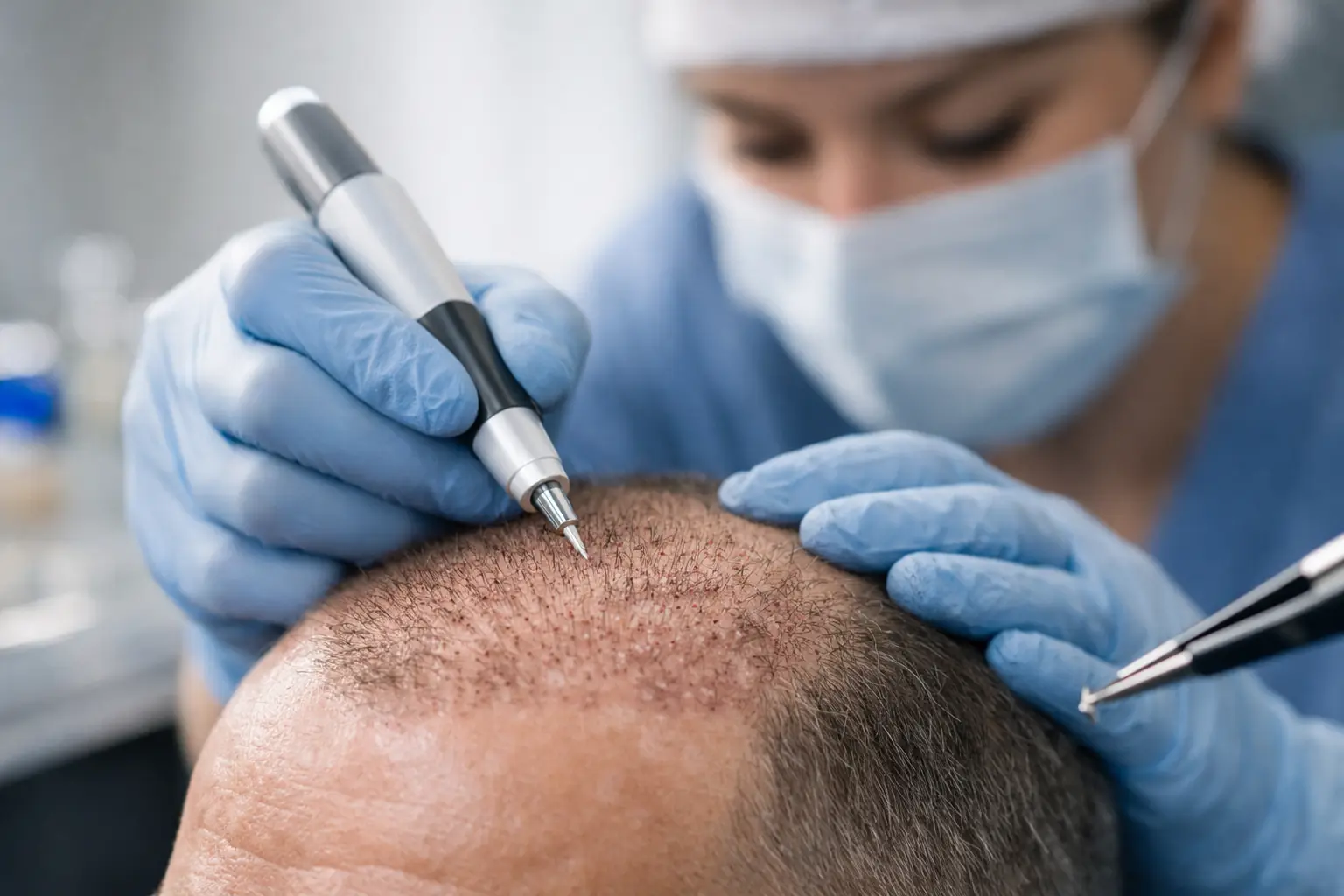
How Implanter Technique Improves Density Results
Learn how implanter technique improves density through controlled graft placement for fuller, natural-looking hair transplant results with care.

FUE Hair Transplant Clinic Quality Audit: The 8-Question Vetting Protocol That Disqualifies the Wrong Clinic Before You Book
Most patients choose an FUE hair transplant clinic based on marketing—not safety. This 8-question vetting protocol exposes red flags competitors never mention, giving you a clear pass/fail framework to audit any clinic before you commit.